Voice over casting is the deliberate process of selecting the right voice talent to match a project’s character, tone, and audience across film, animation, commercials, games, and broadcast media. The global voice over market reached $4.2 billion in 2024, with human vocal performances holding 58.2% market share. That number tells you one thing clearly: authentic human voices are not a luxury. They are the standard. Platforms like Voice123, Voices.com, and VOPlanet have made the casting process more accessible than ever, but the core challenge remains the same. Finding the voice that makes a story land is equal parts art and process.
What is voice over casting and why does it matter?
Voice over casting is the structured practice of identifying, auditioning, and selecting voice talent whose vocal qualities, emotional range, and interpretive instincts best serve a specific media project. The industry term used by casting directors and producers is simply “voice casting,” though “voice over casting” is the phrase most creative professionals search for when learning the process.
Voice casting integrates character understanding, narrative sensitivity, and market adaptation to create functional equivalence rather than direct imitation. That distinction matters. A voice actor cast for a national commercial is not just reading copy. They are embodying a brand’s personality and speaking directly to a specific audience. Get that wrong, and even the most polished production falls flat.
The stakes are high across every format. Animation studios like Pixar and DreamWorks spend months in voice casting because the wrong voice can undermine an entire character arc. Game developers need voices that hold up across hundreds of lines of dialogue. Advertisers need a tone that builds trust in thirty seconds. Each context demands a different casting approach, but the underlying goal is the same: memorable connection between voice and content.
What are the key steps in the voice over audition and casting process?
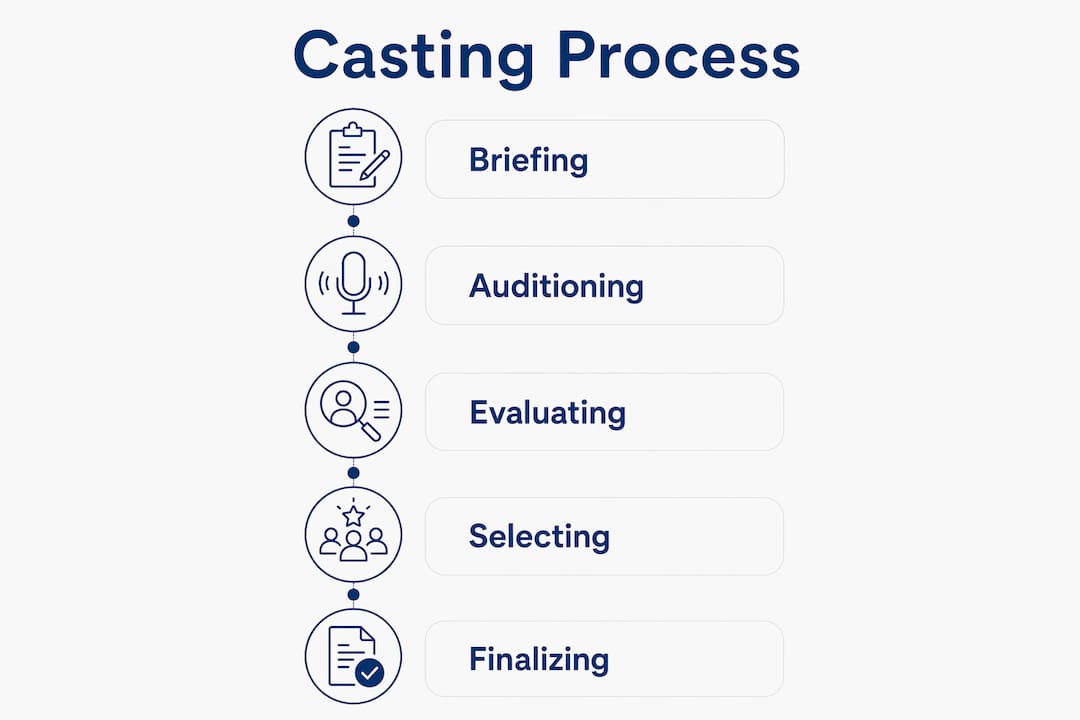
The voice over audition process follows a clear sequence, though the details shift depending on project size, budget, and format. Here is how professional casting typically unfolds:
- Define the project brief. Specify the character or tone, the intended audience, the platform, and any technical requirements. A vague brief produces a flood of mismatched auditions. A precise brief saves everyone time.
- Post the casting call. Distribute the brief through platforms like Voices.com, Voice123, or directly through a talent agent. Include script sides, delivery notes, and submission specs upfront.
- Receive and filter auditions. Submission specs compliance acts as an automatic first filter. Incorrect file naming, wrong formats, or missing metadata frequently lead to immediate disqualification regardless of performance quality. This is not arbitrary. Casting directors managing hundreds of submissions need a fast triage system.
- Evaluate performances. Casting directors often listen for only 3 to 5 seconds before forming a strong impression. The opening line’s delivery carries disproportionate weight. Auditions that open with personality and commitment get heard in full. Safe, generic reads get skipped.
- Narrow the shortlist. Compare the top auditions against the project brief, the director’s instincts, and the client’s expectations. Sometimes a second round of directed reads is requested.
- Make the final selection. Confirm technical specs, negotiate usage rights and fees, and schedule the recording session.
Pro Tip: Write your casting brief as if you are directing the actor in the room. Include one sentence describing the emotional world of the script, not just the product or character name. Actors who understand the subtext deliver far more usable reads on the first take.
How do professional voice castings balance artistic interpretation and technical standards?
The most common misconception in voice casting is that the best voice wins. It does not. The most fitting voice wins. Those are very different things.
Kelly Moscinski, a respected voice casting coach, puts it plainly: “connection beats perfection.” Casting directors do not always know exactly what they want until they hear it, so authentic, instinctual connections to the script tend to book more jobs than technically polished but emotionally neutral reads. This insight reshapes how you should evaluate auditions. You are not grading vocal quality on a scale. You are asking whether this voice makes you feel something.
Here is what professional casting directors weigh when evaluating performances:
- Emotional authenticity. Does the read feel lived in, or does it sound like someone performing a script?
- Uniqueness of interpretation. Did the actor bring a perspective that was not obvious from the copy?
- Consistency across the full read. A strong opening that fades into a flat middle is a red flag for long projects.
- Technical cleanliness. Noise floor, room tone, and pacing all affect usability in post production.
- Alignment with brand or character identity. A voice that works brilliantly for a luxury car brand may be completely wrong for a children’s app.
“Bold, authentic performances aligned with the subtext and director’s evolving needs tend to book more jobs than safe, generic auditions.” — Kelly Moscinski, VOBoss
Technical standards are not separate from artistry. They are a signal of professionalism. Correct file formatting and labeling are used as initial automatic filters by casting directors managing high audition volumes. A brilliant performance buried in an incorrectly named file may never be heard.
What are the common platforms and tools for voice over casting?
Choosing the right platform is one of the first practical decisions in any voice casting project. Each option serves a different need, and understanding those differences saves time and budget.
| Platform | Best for | Fee structure | Talent access |
|---|---|---|---|
| Voice123 | Mid to large projects, diverse talent | Subscription plus per project | Global, multilingual |
| Voices.com | Corporate and commercial work | Subscription or pay per project | Large North American pool |
| VOPlanet | Direct talent communication | Low commission model | Curated, responsive |
| Agent based | Premium or union talent | Agency commission | Exclusive, high profile |
Voice123 and Voices.com provide expansive talent databases and facilitate casting workflows across languages and markets. Both platforms are well suited to producers who need volume and variety. VOPlanet takes a different approach. Direct communication with voice talent through VOPlanet often results in faster responses and more tailored casting experiences, which matters when a deadline is tight or a project requires a specific regional accent.
Agent based casting remains the standard for union work, major animation, and high budget advertising. Agents at firms like CESD Talent Agency or Don Buchwald and Associates represent established voice actors and handle negotiation, contracts, and scheduling. The tradeoff is cost and lead time. For independent productions or smaller budgets, a marketplace platform delivers comparable quality at a fraction of the overhead.
Pro Tip: Before posting on any platform, listen to at least ten demos in your target category. This calibrates your ear and helps you write a casting brief that speaks the language of the talent pool you are drawing from.
How can creative professionals select the right voice talent effectively?
Translating casting theory into a real hiring decision requires a structured approach. The following principles apply whether you are casting a thirty second radio spot or a full length documentary.
- Write for the actor, not the product. Your brief should describe the emotional world of the script. “Warm, conversational, like a trusted friend explaining something important” gives an actor far more to work with than “friendly and professional.”
- Avoid directing by adjective alone. Words like “energetic” or “authoritative” mean different things to different actors. Pair every adjective with a reference point. “Energetic like a coach at halftime, not a game show host” eliminates ambiguity.
- Evaluate auditions against criteria, not preference. Build a simple scorecard: emotional fit, technical quality, uniqueness of read, and alignment with brief. Gut reactions are valuable, but a scorecard prevents you from defaulting to the most familiar sounding voice rather than the most effective one.
- Request a directed read before final selection. Send your top two or three candidates a brief direction note and ask for a revised take. How they respond to direction tells you as much as the original audition.
- Communicate clearly after casting. Post casting feedback, even brief notes, builds relationships with talent and improves future collaborations.
Understanding voice talent roles and skills before you begin casting sharpens your ability to write better briefs and ask better questions during the selection process. The most common mistake first time casting directors make is treating the audition as the end of the process. It is the beginning of a creative collaboration.
Pro Tip: If your project involves narration, read the off camera narration guide before writing your casting brief. Understanding narration technique from the director’s perspective changes how you describe what you need.
Key takeaways
Voice over casting succeeds when creative professionals combine a precise project brief, structured audition evaluation, and a genuine commitment to authenticity over surface level vocal appeal.
| Point | Details |
|---|---|
| Define the brief precisely | Vague briefs produce mismatched auditions; specify tone, audience, and emotional world upfront. |
| First seconds are decisive | Casting directors listen for 3 to 5 seconds, so opening delivery determines whether a full audition gets heard. |
| Technical compliance matters | Incorrect file naming and format errors disqualify strong performances before they are ever heard. |
| Authenticity outperforms perfection | Bold, instinctual reads aligned with script subtext book more jobs than polished but generic performances. |
| Platform choice affects outcomes | VOPlanet, Voice123, and Voices.com each serve different project sizes, budgets, and turnaround needs. |
Why I think most casting briefs are the real problem
After years of working in and around voice over production, the pattern I keep seeing is this: the casting brief is treated as an afterthought. Producers spend weeks on script and visuals, then write three lines for the casting call. That imbalance produces exactly the auditions you would expect. Dozens of competent, forgettable reads that all sound like the same person doing the same thing.
The industry conversation focuses heavily on talent. Are they authentic? Do they have range? Can they take direction? Those are real questions. But the irreplaceable value of human voice performance only shows up when the casting process gives talent something real to respond to. A brief that describes the emotional stakes of the script unlocks performances that no amount of technical polish can manufacture.
My honest observation is that the best casting decisions I have seen come from producers who treat the brief as a creative document, not an administrative one. They describe the world of the project. They name the feeling they want the audience to leave with. They give actors permission to make bold choices. The result is not just a better audition pool. It is a faster, more confident final decision.
Voice casting is not a filter for finding the least objectionable voice. It is a search for the voice that makes the project undeniable.
— kribi
Work with a voice talent built for authentic connection
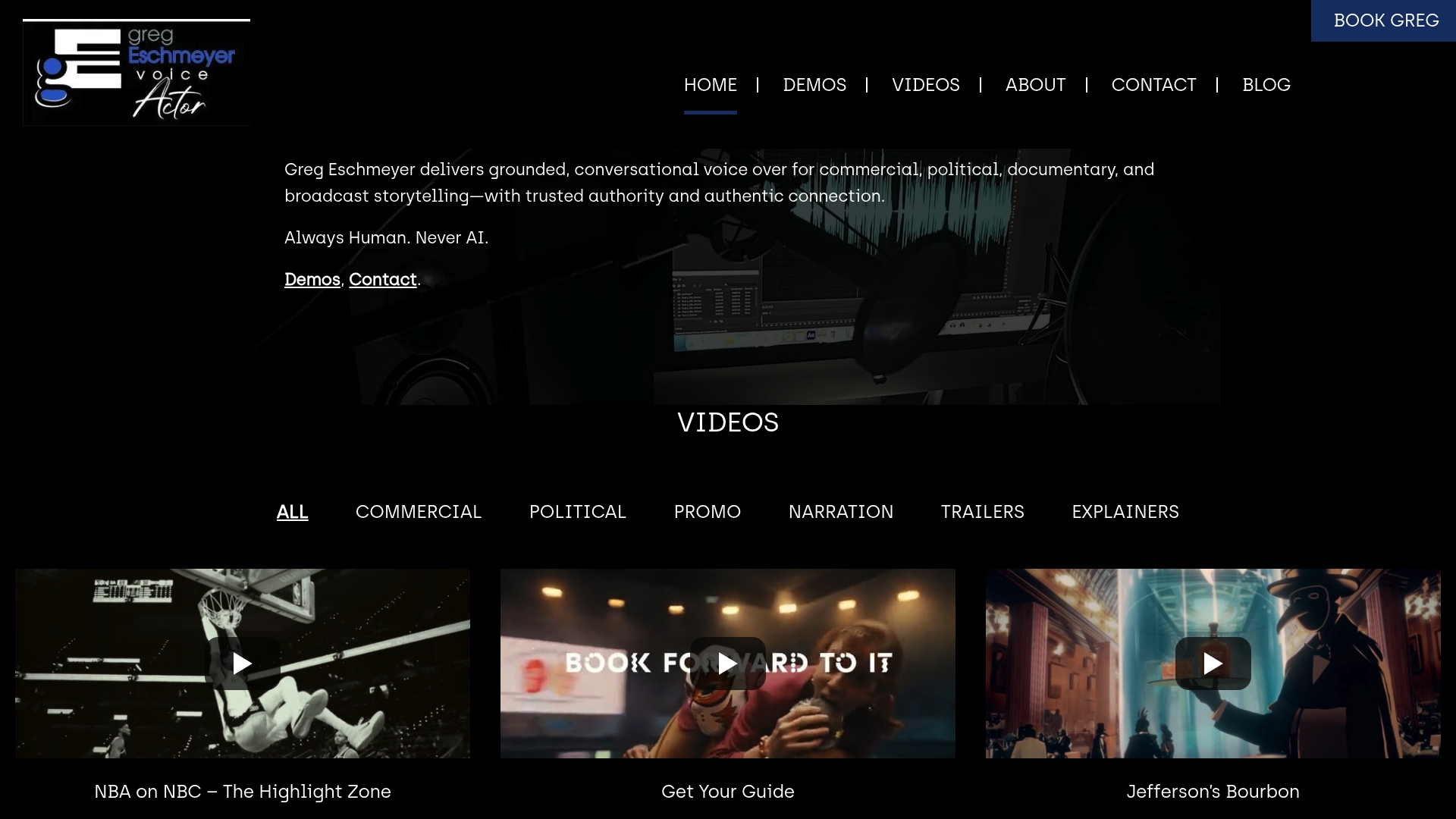
If you are casting for a commercial, documentary, political message, or broadcast project, the voice you choose shapes how your audience receives every word. Gregeschmeyervoice delivers a grounded, conversational style that prioritizes genuine emotional connection over generic polish. Greg Eschmeyer’s clients consistently highlight his fast turnaround, clear communication, and ability to match the specific tone a project demands. Whether you are producing your first campaign or your fiftieth, explore what professional voice talent from Gregeschmeyervoice can bring to your next project.
FAQ
What does voice over casting involve?
Voice over casting involves defining project requirements, posting a casting call, receiving and filtering auditions, evaluating performances against artistic and technical criteria, and selecting the talent whose voice best serves the project’s tone and audience.
How long does the voice over audition process take?
The timeline varies by platform and project size. Marketplace platforms like Voice123 and Voices.com can return a usable shortlist within 24 to 48 hours, while agent based casting for major productions may take one to two weeks.
What makes a voice over audition stand out to casting directors?
Casting directors listen for only 3 to 5 seconds before forming a strong impression, so the opening delivery is critical. Bold, authentic reads that connect emotionally with the script consistently outperform technically clean but generic performances.
What platforms are used for voice over talent selection?
Voice123, Voices.com, and VOPlanet are the most widely used digital marketplaces for voice over talent selection. Agent based casting through firms like CESD Talent Agency is standard for union work and high budget productions.
How do I write a strong casting brief?
Describe the emotional world of the script, not just the product or character. Include one sentence about how you want the audience to feel, a reference tone or comparable voice style, and clear technical submission requirements to filter auditions efficiently.